When it comes to enhancing your outdoor spaces in the Inland Empire, choosing between stamped concrete vs regular concrete can significantly impact the aesthetics and functionality of your patio or driveway. Both materials offer unique benefits, but understanding their differences can help you make the best decision for your home. Whether you’re considering a new concrete driveway installation or designing a charming patio, it’s essential to weigh your options carefully.
Understanding Stamped Concrete
Stamped concrete is a versatile and visually appealing option that allows homeowners to mimic the look of more expensive materials like stone, brick, or wood. This type of concrete is poured and then stamped with patterns while it is still wet, offering a range of designs and textures. In a region like Rancho Cucamonga, where homeowners value both beauty and durability, stamped concrete can be an ideal choice.
One of the major advantages of stamped concrete is its ability to withstand the intense Southern California summer heat and UV exposure. The material is sealed, which helps protect it against weathering and fading. As discussed in our article on top concrete patio finishes, stamped concrete is an excellent choice for those looking to enhance curb appeal.
Exploring Regular Concrete
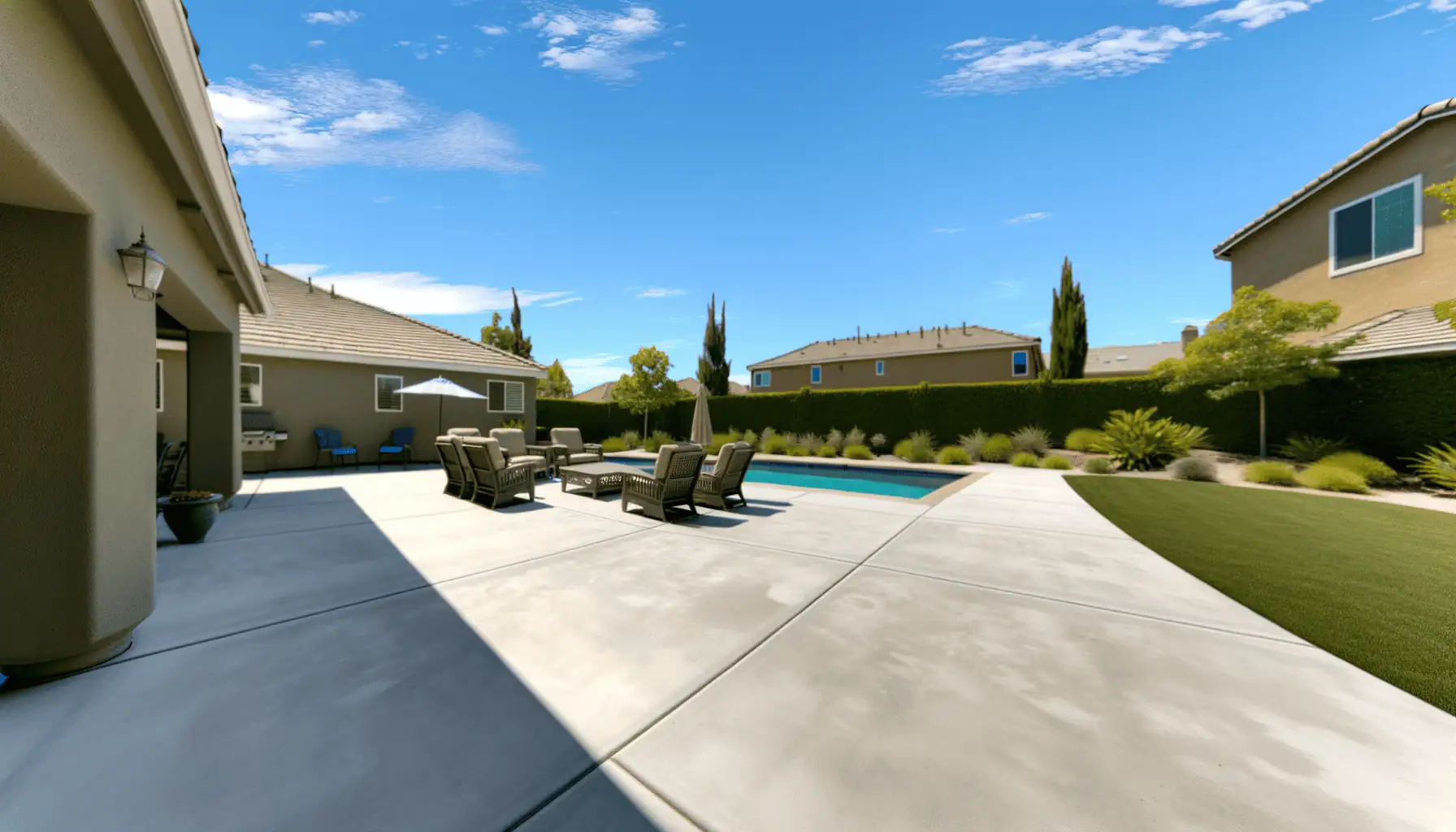
Regular concrete is a reliable and cost-effective option for homeowners seeking durability without the need for intricate designs. It is a more traditional choice and often selected for its functionality and straightforward appearance. In Southern California, where expansive soil conditions can pose challenges, regular concrete offers a stable and resilient solution.
Regular concrete is known for its longevity and low maintenance requirements. It’s an excellent option for driveways, especially if you prioritize durability over aesthetic complexity. Our guide on concrete driveways vs. pavers provides deeper insights into why homeowners might choose this material for their driveways.
Additionally, regular concrete can be an economical choice, particularly for expansive areas that require significant coverage.
Cost Comparison: Stamped Concrete vs Regular Concrete
Cost is a critical factor for many homeowners when deciding between stamped and regular concrete. Stamped concrete tends to be more expensive due to the additional labor and materials required to achieve its unique patterns and textures. This option also includes the cost of sealing, which helps maintain its appearance over time.
Regular concrete, on the other hand, is generally less costly upfront. This makes it a popular choice for larger projects where budget constraints are a consideration. For homeowners in the Inland Empire, where occasional rain events occur, both options provide adequate drainage when properly installed. However, if you’re considering an upgrade to your outdoor spaces, our paver installation services might also be worth exploring for a different aesthetic.
Maintenance Requirements
Maintenance is another crucial aspect to consider in the stamped concrete vs regular concrete decision. Stamped concrete requires periodic sealing to maintain its color and protect it from wear. This is particularly important in sunny climates like Southern California, where UV exposure can cause fading.
Regular concrete, while less decorative, is known for its minimal maintenance needs. Occasional cleaning and sealing can help preserve its appearance and durability, making it a practical choice for many homeowners. To further enhance the longevity of your outdoor installations, consider our retaining wall services to manage soil and water flow effectively.
Comparison Table: Stamped Concrete vs Regular Concrete
| Feature | Stamped Concrete | Regular Concrete |
|---|---|---|
| Cost | Higher initial cost due to patterns and sealing | Lower initial cost |
| Aesthetic Appeal | Wide range of designs and textures | Simple, traditional appearance |
| Durability | Highly durable with proper maintenance | Extremely durable |
| Maintenance | Requires periodic sealing | Minimal maintenance needed |
| UV Resistance | Good with proper sealing | Good |
Frequently Asked Questions
What are the main differences between stamped concrete and regular concrete?
The primary differences between stamped concrete and regular concrete lie in their aesthetic appeal and cost. Stamped concrete offers a variety of patterns and can mimic natural stone or brick, making it more decorative. Regular concrete is simpler in appearance but often more cost-effective. Both options provide durability and require different levels of maintenance.
Is stamped concrete suitable for the Inland Empire’s climate?
Yes, stamped concrete is well-suited for the Inland Empire’s climate, which includes intense summer heat and occasional rain. The material is durable and, when properly sealed, can resist UV damage and weathering. For those considering outdoor projects, our outdoor design services can help tailor solutions to specific climate conditions.
How often should stamped concrete be sealed in Southern California?
In Southern California, stamped concrete should be sealed every two to three years to maintain its appearance and protect it from UV rays and weathering. Regular sealing helps preserve the color and pattern of the concrete. If you’re exploring options for different outdoor surfaces, our article on custom pool construction provides insights into durable, long-lasting outdoor solutions.
What is the lifespan of regular concrete in Rancho Cucamonga?
Regular concrete can last 30 years or more in Rancho Cucamonga with proper installation and minimal maintenance. Its durability makes it an excellent choice for driveways and pathways. For homeowners interested in enhancing their curb appeal, our entryway services offer additional options for creating welcoming outdoor spaces.
Can I install stamped concrete myself?
While some homeowners may consider DIY stamped concrete projects, professional installation is recommended to ensure proper pattern alignment and material durability. Professionals have the expertise and tools necessary to create stunning results. If you’re planning a complex project, our full-service offerings can provide the guidance and expertise needed for high-quality installations.
Are there any alternatives to concrete for patios in Southern California?
Yes, there are several alternatives to concrete for patios in Southern California, including pavers, stone, and tile. Each option has its unique benefits and aesthetic appeal. For those interested in exploring alternatives, our porcelain pavers offer a durable and attractive solution for outdoor spaces.
Conclusion
Choosing between stamped concrete vs regular concrete for your patio or driveway depends on your aesthetic preferences, budget, and maintenance willingness. Both options offer durability and can withstand the challenging climate conditions of the Inland Empire. For personalized advice and to explore your options further, consider reaching out to us to request a free estimate and discuss your project needs with our experts.