“`html
Key Takeaways
- Concrete patios are cost-effective — typically more affordable upfront compared to paver patios.
- Paver patios offer design flexibility — allowing for a variety of patterns and colors to suit your style.
- Southern California climate impacts durability — both materials respond differently to heat and moisture.
- Maintenance varies significantly — concrete may require sealing, while pavers might need re-leveling over time.
- Concrete patio vs paver patio decisions — consider your budget, design preference, and maintenance commitment.
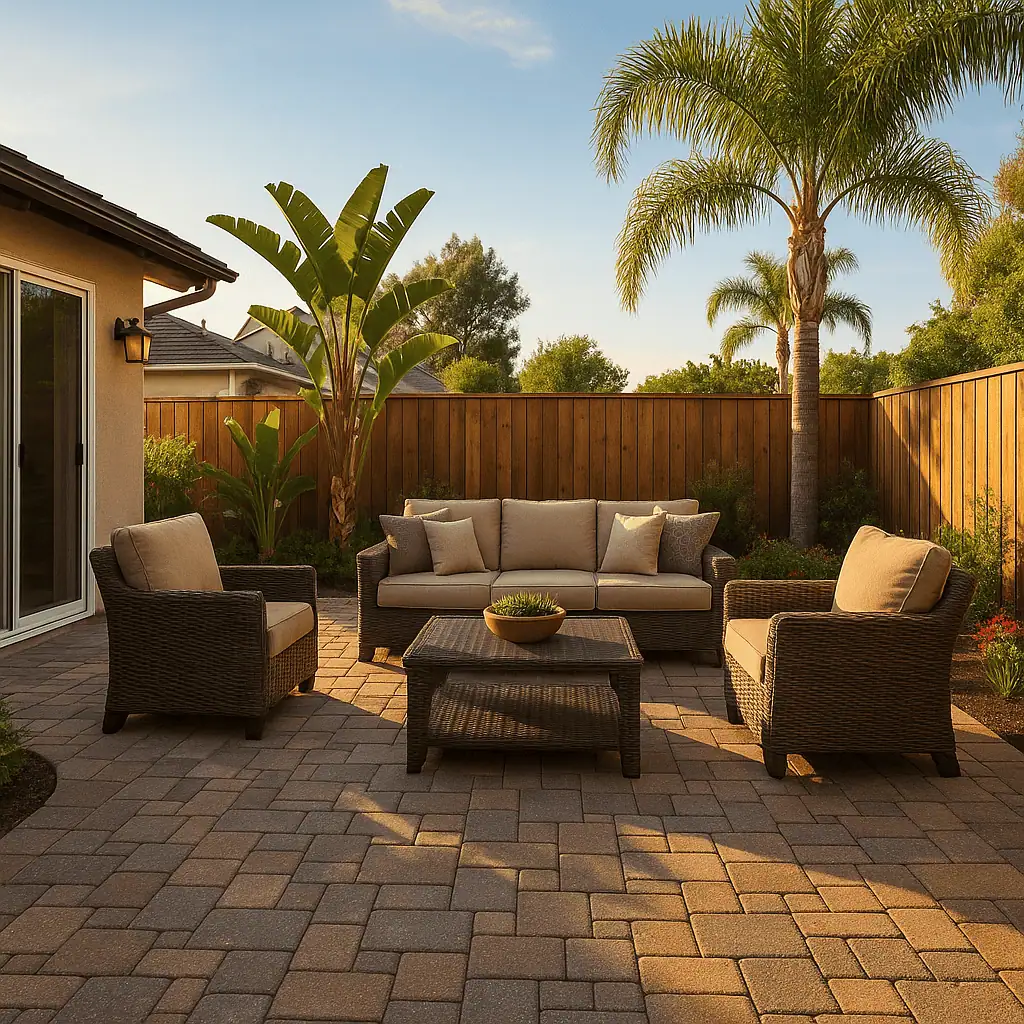
Choosing between a concrete patio vs paver patio for your Inland Empire backyard involves weighing factors like cost, design options, durability, and maintenance. Concrete patios tend to be more affordable upfront, while paver patios offer superior design flexibility. Whether you’re in Rancho Cucamonga or Claremont, understanding these differences will help you make an informed decision. To ensure your project is handled with expertise, request a free design consultation with us today.
Cost Considerations
When evaluating the cost of a concrete patio vs paver patio, concrete generally emerges as the more budget-friendly option. The simplicity of pouring concrete reduces labor costs, making it appealing for homeowners in areas like Upland and Ontario. However, paver patios, while initially more expensive due to material and labor intensity, can add greater value to your property with their aesthetic appeal. A&R Concrete & Hardscape, with over 40 years of experience, ensures competitive pricing and quality, fully utilizing our California Contractor’s License for your peace of mind.
Design Flexibility
Paver patios offer unparalleled design flexibility. With a range of colors, shapes, and patterns, they allow homeowners in Glendora and San Dimas to create custom looks that complement their homes. Conversely, concrete patios can also be creatively enhanced with various finishes like stamped or stained concrete. This versatility in design ensures that both options can cater to diverse aesthetic preferences.
Durability and Climate Impact
Durability is a crucial factor, especially given the intense summer heat and occasional rain events typical of Southern California. Concrete patios are robust and can withstand heavy use, but they may crack under expansive soil conditions prevalent in areas like Fontana. Paver patios, being flexible, can adjust to ground movements, reducing the risk of visible damage. For projects involving engineered retaining walls, our deep engineering expertise ensures durability and compliance with city permits.
Maintenance Requirements
The maintenance of a concrete patio vs paver patio varies significantly. Concrete patios may require periodic sealing to maintain their appearance and prevent staining, especially in high-traffic areas like Chino Hills. Paver patios need occasional re-leveling and replacing individual pavers to maintain their look and function. Our family-owned operation emphasizes quality construction, ensuring that “we do more than manage your project, we build it!”
Environmental Impact and Sustainability
Considering the environmental impact is essential in today’s construction. Paver patios offer better permeability, reducing water runoff and promoting groundwater recharge, which is vital in Southern California’s dry spells. Concrete patios, while less permeable, can incorporate sustainable practices through the use of recycled materials. For more on sustainable practices in pool and landscape projects, explore EPA WaterSense programs.
| Aspect | Concrete Patio | Paver Patio |
|---|---|---|
| Cost | $8-$12 per sq ft | $15-$20 per sq ft |
| Design Flexibility | Limited to finishes | High with various patterns |
| Durability | Can crack under pressure | Flexible and durable |
| Maintenance | Requires sealing | Re-leveling needed |
| Environmental Impact | Less permeable | Promotes water infiltration |
Frequently Asked Questions
What is more cost-effective in Rancho Cucamonga: a concrete patio or a paver patio?
In Rancho Cucamonga, a concrete patio generally costs less upfront compared to a paver patio. The simpler installation process of concrete results in lower labor costs. However, if you value design and long-term property value, investing in a paver patio might be beneficial. To see how our team can tailor these options to your budget, see our paver installation work.
Which patio type is better for the soil conditions in the Inland Empire?
Given the expansive soil conditions in the Inland Empire, paver patios offer an advantage due to their flexibility. They can adapt to soil movement, reducing the risk of cracking. Concrete patios, while robust, may require more maintenance if soil expansion causes cracks. Our expertise in engineered solutions ensures that your patio is built to withstand local soil challenges.
How do concrete and paver patios handle Southern California’s heat?
Both concrete and paver patios are suitable for Southern California’s heat. Concrete can absorb and retain heat, making it hotter underfoot, which is something to consider during summer months. Pavers, due to their lighter color options, can remain cooler. For heat-resistant options, consult the American Concrete Institute for best practices.
Which patio style requires less maintenance in Upland?
In Upland, concrete patios typically require sealing every few years to maintain appearance, whereas paver patios might need re-leveling and occasional replacement of individual pavers. The choice depends on your willingness to perform regular maintenance. For comprehensive guidance, learn about our various services that ensure lasting quality.
Can I install a concrete or paver patio myself in Chino?
While DIY installation is possible, professional installation ensures structural integrity and aesthetic appeal. In Chino, hiring experienced contractors like A&R guarantees compliance with city codes and maximizes your patio’s lifespan. We pride ourselves on direct involvement in all projects, ensuring top quality without subcontractors.
What are the environmental benefits of a paver patio?
Paver patios are environmentally friendly due to their permeability, reducing stormwater runoff. This feature is beneficial in Southern California’s dry climate, promoting water conservation and groundwater recharge. For sustainable landscaping options, UC Davis Extension provides valuable insights.
Conclusion
Deciding between a concrete patio vs paver patio involves evaluating cost, design, durability, and maintenance in the context of Southern California’s climate. With over 40 years of experience, A&R Concrete & Hardscape is equipped to deliver exceptional results tailored to your needs. Contact A&R Concrete & Hardscape for a free estimate and let us transform your outdoor space into a beautiful and functional extension of your home.
“`