
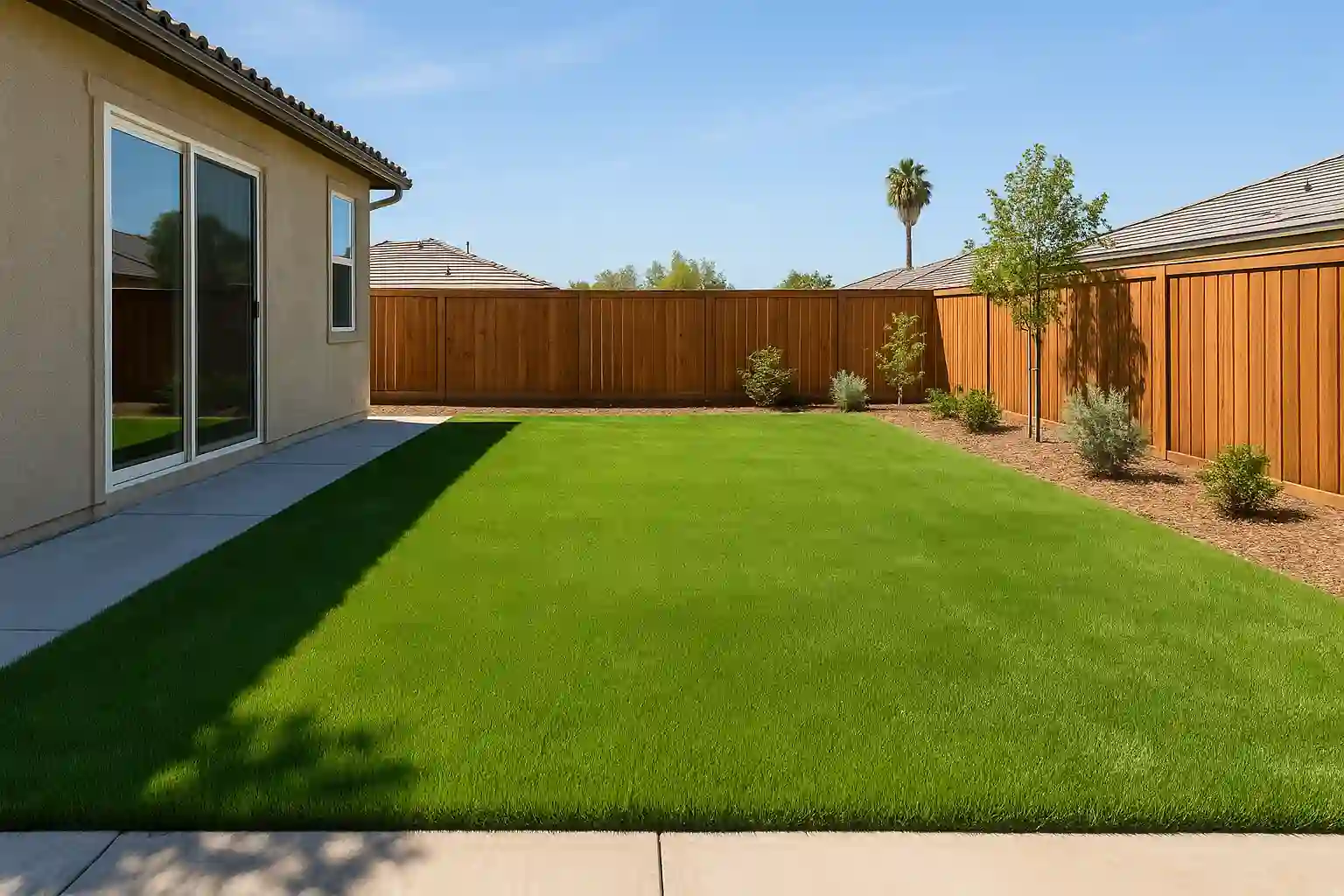
In sunny Southern California—especially in areas like Rancho Cucamonga, Upland, Ontario, Fontana, Claremont, Chino, Chino Hills, Montclair, Eastvale, Corona, Little Rock, Riverside, and surrounding Inland Empire cities—homeowners often face a tough decision: artificial turf or real grass? Water usage, maintenance, appearance, lifespan, and overall cleanliness all matter. And while both have pros and cons, the climate and local water restrictions make artificial turf more attractive than ever. At A&R Concrete & Hardscape, we install a lot of turf—and when done right, it’s not just a substitute for grass… it can be an upgrade.
Water Usage: Turf Wins by a Mile
Southern California receives limited rainfall and strict watering guidelines are becoming common throughout the Inland Empire. Real grass requires regular irrigation to stay green—especially in hotter inland cities. Artificial turf, however, needs almost no water beyond an occasional rinse. According to the EPA WaterSense Program, outdoor irrigation can account for over 50% of household water use in dry regions. This is why many homeowners switch from sod to synthetic turf—to cut water bills and comply with local conservation efforts.
Maintenance: Turf Saves Time & Costs
Real grass requires: mowing, edging, fertilizing, weeding, aeration, watering, reseeding, and seasonal care.
Artificial turf requires: occasional rinsing, light brushing, and leaf removal depending on your landscape design.
That difference adds up—especially for homeowners in Rancho Cucamonga, Corona, or Upland who want clean landscapes without spending weekends maintaining them. Turf also helps rental properties and vacation homes stay visually appealing all year long with almost no upkeep.
Appearance & Realism
Modern artificial turf has come a long way. There are blends that mimic real grass fibers, thatch layers, and small variations in blade color for natural-looking texture. We use premium products that keep their color and structure even in high-traffic areas. When paired with paver walkways, concrete borders, or decorative rock installations, artificial turf can visually elevate outdoor spaces far beyond what sod can do alone.
Lifespan & Long-Term Value
Real grass can burn out, erode, or die off during hot summers. Heavy foot traffic can create bare patches, requiring reseeding and soil repair. With routine care, artificial turf often lasts 12–15 years—sometimes more when installed properly over a stable base with proper drainage. For property owners in Chino Hills, Riverside, and Montclair, turf becomes more of an investment than a short-term landscaping choice.
Cleanliness & Kids / Pet Friendly Benefits
Artificial turf reduces mud, puddling, pest activity, and fertilizer exposure. Families with pets appreciate that it’s easy to clean and eliminates muddy paw prints after rain. Some installations include antimicrobial infill or pet-specific drainage layers. Turf can also reduce allergens found in traditional lawns. For safe installation guidelines, check out resources from the CDC Healthy Water Initiative and UC Agriculture & Natural Resources.
Southern-Facing Aspects & Window Reflection Concerns
One important factor to consider is the sun exposure and direction of your yard. Southern-facing areas of a home receive the most direct sunlight and tend to heat up more throughout the day. Certain window placements—especially low-E or energy-efficient glass—can reflect sunlight intensely enough to damage or melt artificial turf if the reflection lands directly on the surface.
However, this issue is easy to prevent with proper planning. During our site evaluation, we look for these risk zones and suggest protective measures such as reflection films, shade structures, re-angled turf sections, or heat-resistant turf types. The goal isn’t to avoid turf—it’s to install it strategically so it looks great and lasts.
Comparison at a Glance
| Category | Artificial Turf | Real Grass (Sod) |
|---|---|---|
| Water Usage | Minimal – occasional rinse only | High – constant irrigation needed |
| Maintenance | Low – brushing & cleaning | High – mowing, fertilizing, reseeding |
| Lifespan | 12–15 years on average | Variable – drought & traffic dependent |
| Appearance Year-Round | Always green | Can fade, die, or burn |
| Cleanliness | No mud, fewer pests | Can pool water, attract insects |
| Great for Kids & Pets? | Yes – very popular | Depends on conditions |
Note: We specifically choose high-quality turf products rated for Southern California heat and sun exposure.
Best Uses for Artificial Turf
Some of the most popular artificial turf installations in Rancho Cucamonga, Upland, Ontario, Corona, and surrounding areas include:
- Backyard play areas
- Pet-friendly zones
- Side yards with poor sun exposure
- Pool surrounds
- Courtyards & patios
- Rental & income properties
- Commercial entries & HOA common areas
- Putting greens installation
We Install Artificial Turf the Right Way
Artificial turf is not “just a product”—it’s a construction project. We evaluate slope, sunlight, window reflections, drainage, access points, and soil stability before we install anything. That’s why we’re trusted as one of the top Artificial Turf contractors in Rancho Cucamonga and frequently work in nearby cities including Upland, Ontario, Eastvale, Corona, Riverside, Little Rock, Chino, Chino Hills, Fontana, Montclair, and Claremont.
Final Thought
If you’re debating Artificial Turf vs. real grass, let us walk the property with you. We’ll show samples, pricing options, irrigation savings, and where turf makes the biggest impact. Most homeowners are surprised how quickly turf pays for itself—especially when water bills and maintenance time are factored in. Outdoor living should be stress-free—and the right turf installation can make it exactly that.
Need a quote or site evaluation?
A&R Concrete & Hardscape can design and install turf that works with your home—not against it. Let’s build a yard that stays green all year without wasting water.