If you’re planning a masonry project in Rancho Cucamonga, Fontana, Upland, Claremont, San Dimas, Chino, Ontario, Glendora, or the Inland Empire, one of the most common questions we hear is:
“Do I need a block wall or a retaining wall?”
While they may look similar, these two types of walls serve very different purposes—and choosing the wrong one can lead to structural failure, drainage issues, or failed inspections.
What Is a Block Wall (Party Wall or Partition Wall)?
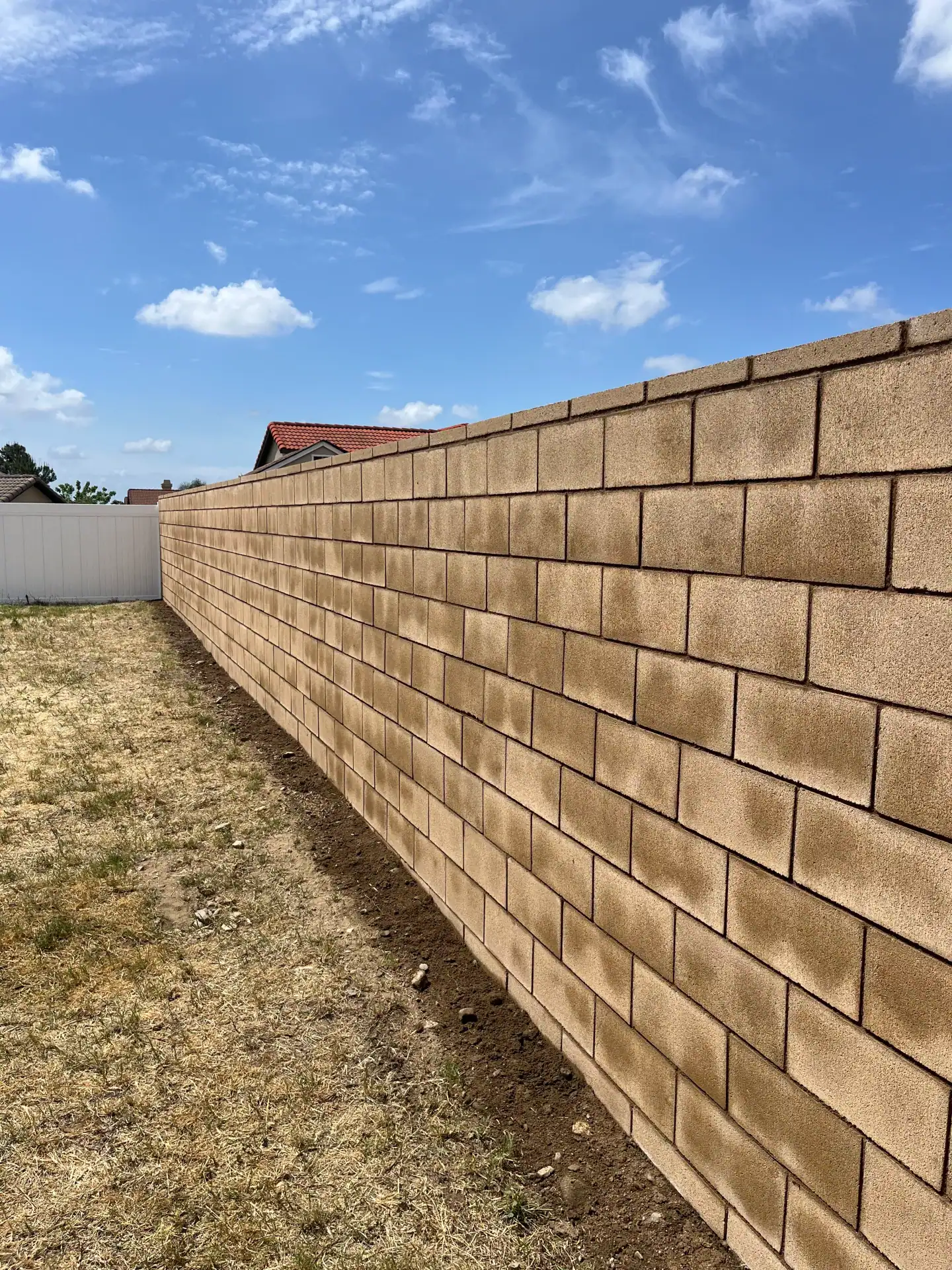
A block wall, often referred to as a party wall or partition wall, is typically built along a property line to separate two properties.
These walls:
- Range from 1 to 8 feet in height
- Most city standard plans (like in Rancho Cucamonga) go up to 6 feet without engineering
- Are considered non-retaining walls
What Does “Non-Retaining” Mean?
A non-retaining wall is not designed to hold back soil. That means:
- No soil is built up behind the wall
- No surcharge load (pressure from soil, slopes, or structures)
- Minimal lateral pressure on the wall
These walls are primarily for:
- Privacy
- Property separation
- Basic security
They typically use 6” or 8” block, depending on city standards, with standard rebar spacing and a simple footing per city requirements.
What Is a Retaining Wall?
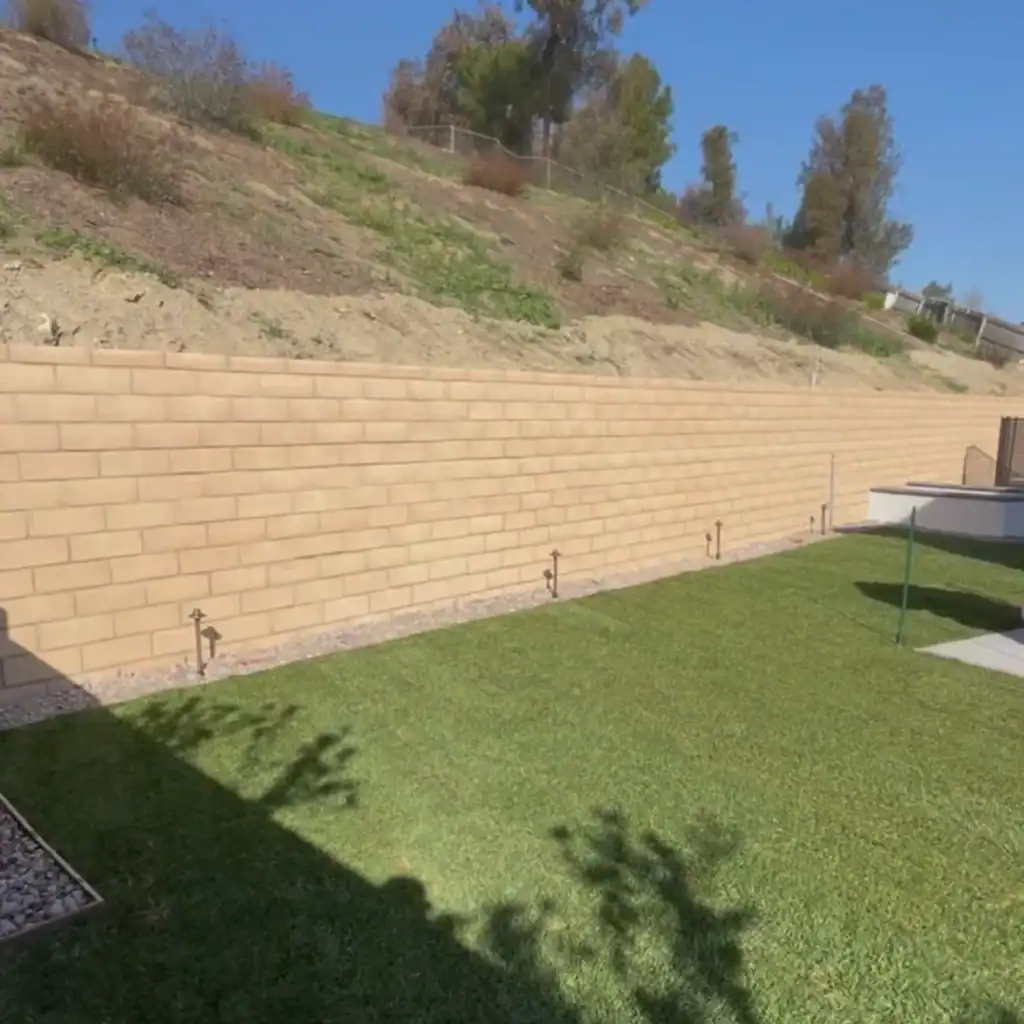
A retaining wall is designed to hold back soil, slopes, or grade changes. This introduces lateral pressure, which requires significantly more engineering and reinforcement.
Retaining walls are used when:
- You are cutting into a hillside
- You need to create a level yard
- There is soil being held behind the wall
Key Differences Between Block Walls and Retaining Walls
- Structural Design
- Block Wall: Hollow core, lighter reinforcement
- Retaining Wall: Fully grouted solid with concrete, heavier steel reinforcement
Retaining walls often include:
- Vertical rebar at tighter spacing
- Horizontal bond beams every ~2 feet
- Engineered footing dimensions
- Engineering Requirements
- Many cities allow block walls up to 6 feet under standard plans
- Retaining walls often require engineering at any height, depending on the city. Some cities provide engineering details up to 6 feet in height
- Over 6 feet, engineered plans are almost always required
- Block Size
- Standard block walls: 8” wide block
- Retaining walls: 8” to 12” wide block, depending on height and load
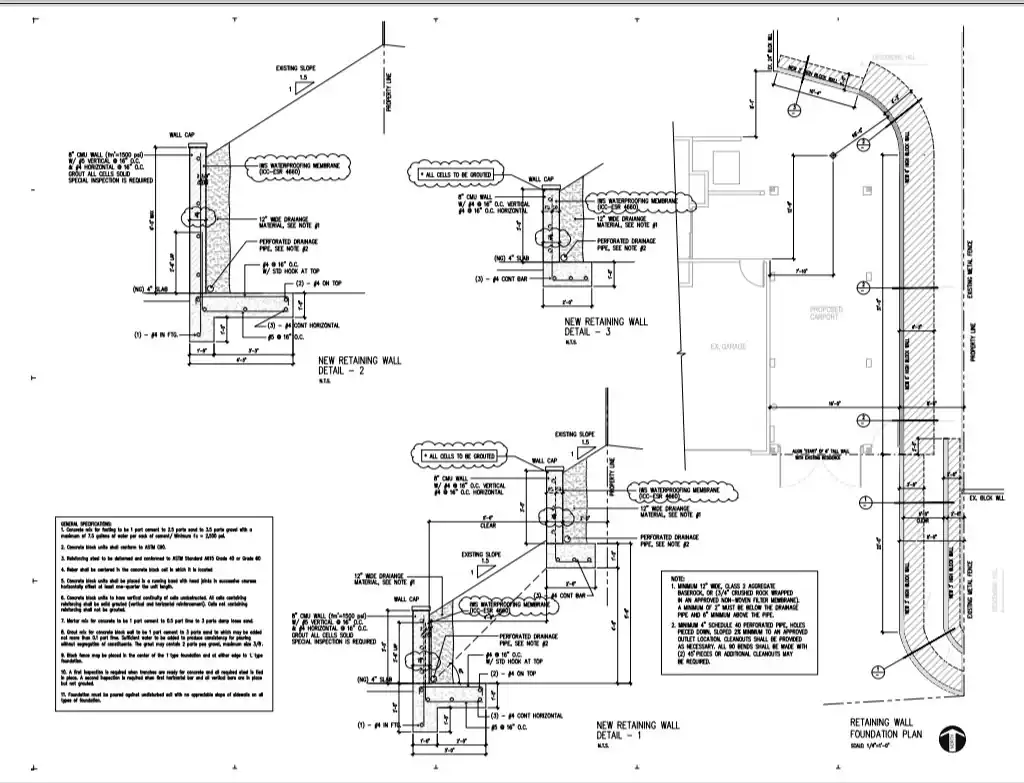
- Drainage Systems (Critical for Retaining Walls)
One of the biggest differences is drainage.
Retaining walls require:
- Gravel and/or compacted backfill
- Perforated drain pipe (French drain system)
- Weep holes (in some designs)
Without proper drainage, hydrostatic pressure builds up and can cause wall failure.
- Waterproofing
At A&R Concrete & Hardscape, we apply:
- Waterproofing membranes
- Sealants on the soil-facing side
This protects the wall from moisture intrusion and increases longevity.
- Cost Differences
Retaining walls are more expensive due to:
- Excavation and cutback into existing slopes
- Additional concrete and rebar
- Drainage systems
- Engineering and permitting
Block walls, on the other hand, are more straightforward and require less soil removal. However, if the situation calls for a retaining wall, a block wall is not allowed to be used in its place.
City Standards vs. Engineered Plans
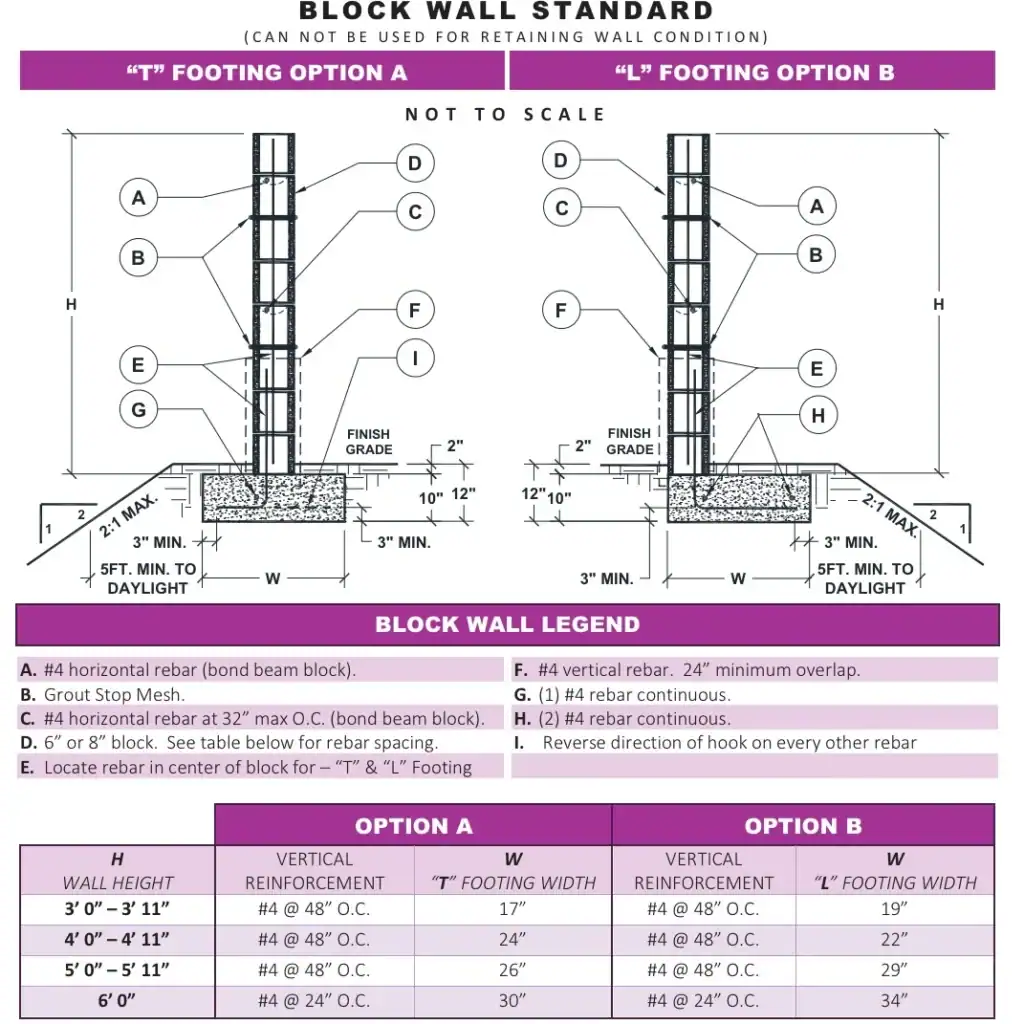
Here’s an example of a standard block wall detail used by many Inland Empire cities:
City standard plans are typically:
- Pre-approved
- Limited in height and application
- Designed for non-retaining conditions only
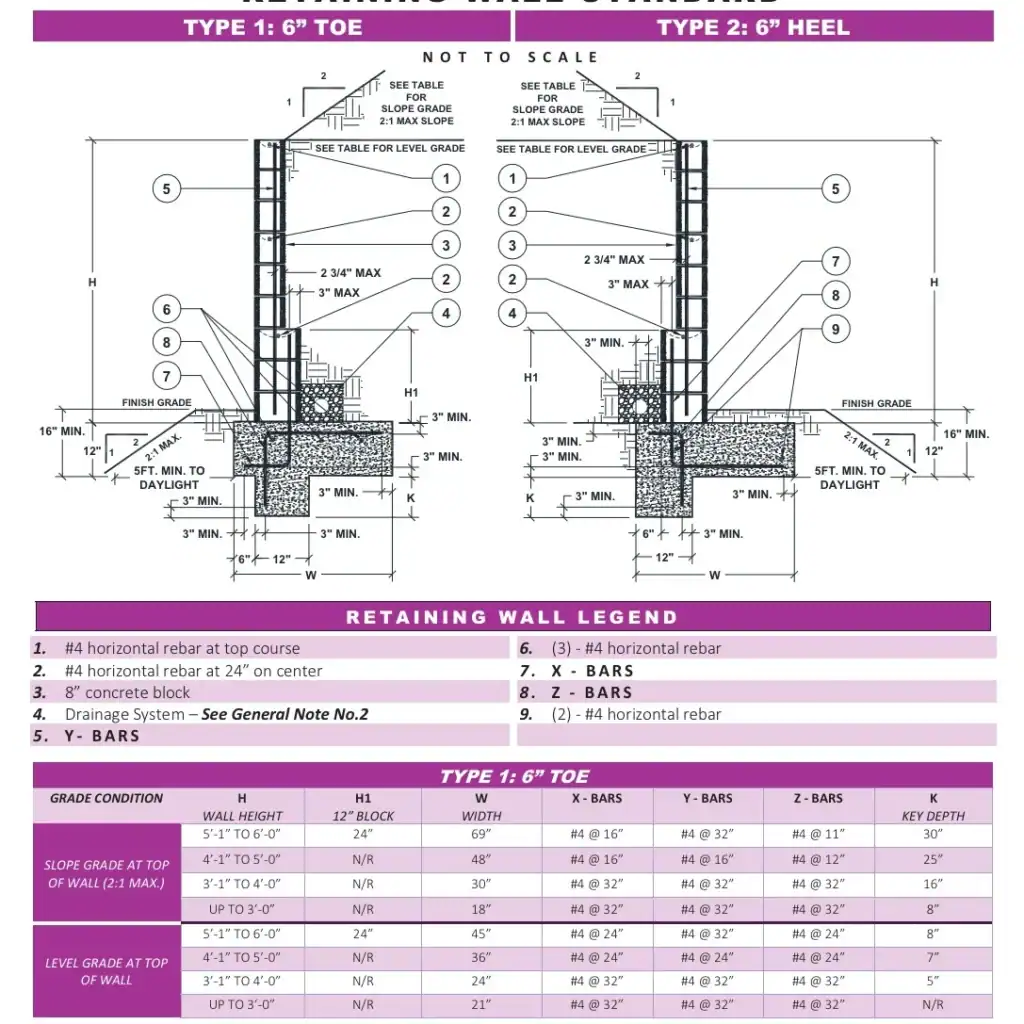
For retaining walls—especially in areas like La Verne, San Dimas, and surrounding cities—engineered plans are required to specify:
- Footing size
- Rebar placement
- Load calculations
We Handle Engineering & Permits for You
At A&R Concrete & Hardscape, we don’t just build walls—we manage the entire process from start to finish.
We:
- Coordinate with licensed structural engineers
- Prepare and submit plans to your city
- Handle permits and inspections
- Build to exact engineered specifications
This ensures your project is code-compliant, structurally sound, and built to last.
Serving the Inland Empire
We provide retaining wall and block wall construction services in:
- Rancho Cucamonga
- Fontana
- Upland
- Claremont
- San Dimas
- Glendora
- Chino
- Ontario
- Throughout the Inland Empire
Need Help Deciding?
If you’re unsure whether your project requires a block wall or a retaining wall, we can help assess your property and guide you in the right direction.
📞 Contact A&R Concrete & Hardscape today for a consultation.